Last updated
Fahas Appointment: How to Book Your Car Inspection Online and the Day-Before Checklist That Avoids a Fail
A Fahas appointment is booked online on SASO's unified Periodic Technical Inspection platform (pti.saso.gov.sa); the old vi.vsafety.sa link now redirects there. Enter the owner ID and the sequence number from your registration card, pick a centre and time, and pay online. If the car fails, you get two re-inspections within 14 working days at a lower fee.
Booking takes five minutes. The part that decides whether you pass is what you do the evening before. This guide covers both: the booking steps, then a checklist of things you can check in your own parking spot, followed by what happens after a fail and what an expired inspection costs you.
Fahas, MVPI, PTI: one inspection, three names
Fahas (فحص) is Arabic for inspection. Most people still say "Fahas" or "MVPI", which was the older English name. The official term today is Periodic Technical Inspection (الفحص الفني الدوري), and the platform belongs to the Vehicle Safety Center at SASO, the Saudi standards body. Inspections are carried out by private companies licensed by SASO, so the centre you visit may carry a company brand, but the booking, the result and the certificate all run through the same SASO system.
When do you need it? The platform lists three cases: periodically, before your current inspection expires; when transferring ownership if the vehicle has no valid inspection; and for vehicles coming from outside the Kingdom, within 15 days of entry if they have no valid inspection from abroad.
How to book a Fahas appointment online
- Open the platform. Type pti.saso.gov.sa yourself, or use the official Vehicle Safety app. Since April 2026 you can also book in Tawakkalna. Do not book through links in messages.
- Choose Book Appointment and select the owner type. If the car is registered to a company or to a bank (common with financed cars), choose Companies rather than Individuals.
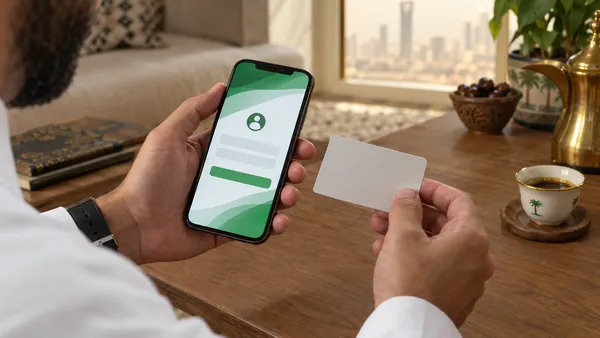
- Enter the owner ID and the vehicle sequence number from the registration card (istimara). The platform asks you to make sure the owner ID is the one linked to that sequence number. If the car is in your employer's name, you need their details.
- Pick the vehicle type, area, service and centre, then a date and time.
- Pay the fee online. You receive a confirmation. Printing it is optional; the platform says it is not needed for any formality.
- Arrive on time. Under the regulation you may change your booking up to 24 hours before the slot. If you simply do not show up, the platform blocks new bookings for 48 hours.
How much does Fahas cost?
Fees depend on the vehicle class and are listed on the platform's Inspection Fees page before you pay. For a private car, the figure widely published is SAR 115 including VAT for the first inspection and SAR 37.95 including VAT for a re-inspection. Treat these as a guide and confirm on the platform, since it shows the live amount for your vehicle type.
| Item | Private car | Where to confirm |
|---|---|---|
| First inspection | About SAR 115 incl. VAT | Platform, Inspection Fees |
| Re-inspection (each of 2 attempts) | About SAR 38 incl. VAT | Platform, Inspection Fees |
| Re-inspection window | 14 working days from first inspection | Inspection document |
| Excluded vehicle | No refund, no re-inspection | Regulation, Article 37 |
The day-before checklist
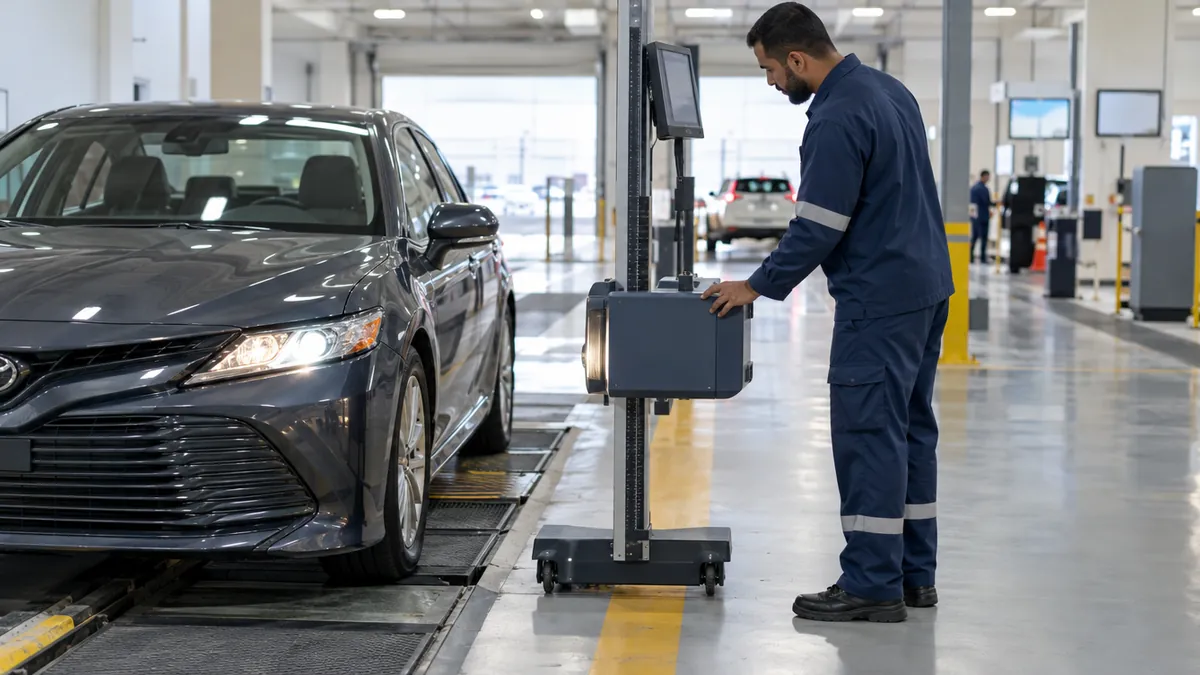
The inspector drives the car onto the test lane and checks it against SASO's criteria, which you can read under Inspection Criteria on the platform. Many fails come from items an owner could have spotted at home. Give yourself 20 minutes the evening before, ideally with a friend to stand outside the car.
Lights and signals
Lights are the easiest items to test and the cheapest to fix, so start here.
- Headlights on low and high beam, both sides.
- Brake lights: have your friend watch while you press the pedal. Do not assume one dead bulb will be overlooked.
- Indicators front and rear, hazard lights, reverse lights and the number plate light.
- Cracked or foggy lenses. A bulb that works behind a smashed cover may still be marked.
Tyres, brakes and steering
These are safety items, and a repair shop may need a day, so check them early in the week if you can.
- Tread depth and sidewalls. Look for bulges, cuts and wear bars that are level with the tread.
- Any brake warning light on the dashboard, a soft pedal, or grinding noises. Fix brakes before the test, not after.
- Strange knocks over speed bumps can point to worn suspension parts, which are part of the check.
Inside the car
Sit in the driver's seat and work through these one by one.
- Every seatbelt clicks in and releases.
- The horn works. Wipers clear the screen and the washer sprays.
- Windscreen cracks in the driver's line of sight.
- Dashboard warning lights. Engine or airbag lights invite a closer look.
Under the car and under the bonnet
Some of these can get the car excluded rather than failed, which is worse, as the warning below explains.
- Leaks on the floor of your parking spot overnight: oil, coolant, brake fluid or fuel.
- Exhaust smoke and loud exhaust noise.
- Engine temperature that climbs in traffic.
Paperwork and the car's identity
The centre matches the car against its registration before testing anything else.
- The registration card is valid and the details match the car: plate, colour, chassis number.
- Both plates are fitted and readable.
- Any body modification or conversion has been approved and recorded.
After the inspection: pass, fail or excluded
You get the result by SMS when the inspection ends.
- Pass: a sticker goes on the windscreen and the inspection document is issued. You can download it later from the platform.
- Fail: you receive a re-inspection document listing the failed items. You have two re-inspection chances within 14 working days of the first inspection, at the re-inspection price. Each needs an appointment, which you book under the re-test option on the platform. You may go to any licensed centre, and only the failed items are checked again unless new defects show up.
- Excluded: the inspection is stopped and marked incomplete. Fix the problem and book a new full inspection.
If the 14 working days pass, or you use up both re-inspections, the car needs a fresh full inspection at the full fee. Plan repairs quickly, and count working days rather than calendar days.
How do I check if my Fahas is still valid?
Use Check inspection status on the platform. Enter the vehicle sequence number for a registered car, the customs card number for a newly imported car before registration, or the chassis number for a non-Saudi vehicle. The result shows the inspection date, expiry date, centre and outcome. If the expiry date on a document is shown only in Hijri, our Hijri date converter gives you the Gregorian date.
Penalty for an expired Fahas
The Traffic Law lists "not presenting the vehicle for periodic technical inspection" in Table 3 of its violations. Article 68 sets the fine for that table at SAR 150 to 300. Like other traffic fines, it then appears on Absher and has to be cleared before many vehicle services will go through; see our traffic violations check guide for paying or objecting.
Your licence also has to be valid for you to drive to the centre. If yours is close to expiry, our driving license guide covers renewal on Absher.
Frequently asked questions
How do I book a Fahas appointment online?
Go to the unified Periodic Technical Inspection platform run by SASO at pti.saso.gov.sa. The older address vi.vsafety.sa now redirects there. Choose Book Appointment, enter the owner ID and the vehicle sequence number from the registration card, pick the vehicle type, area, inspection centre and time, then pay the fee online. The Vehicle Safety app and, since April 2026, the Tawakkalna app offer the same booking. Appointments are required: the regulation says the driver must book through the electronic system.
What is the Fahas fee for a private car?
The fee depends on the vehicle class and is shown on the platform before you pay. For a private car it has been widely reported as SAR 115 including VAT for the first inspection and about SAR 38 including VAT for a re-inspection. Check the Inspection Fees page on the platform, which lists the current amount for each vehicle type.
What happens if my car fails Fahas?
You get a re-inspection document listing the failed items. You then have two re-inspection chances within 14 working days of the first inspection, at the lower re-inspection price. You must book an appointment for each re-inspection, and it can be done at any licensed centre. Only the failed parts are rechecked unless new defects appear. After 14 working days or two failed attempts, you start again with a full inspection.
How long is Fahas valid?
The expiry date is printed on your inspection document and shows on the platform when you use Check inspection status with your vehicle sequence number. The General Department of Traffic says a new private car has its first periodic inspection three years after it was first licensed, then one every year. Taxis and buses start after two years. The expiry date on your own document is what counts, so book before it passes.
What is the fine for an expired Fahas?
Failing to present a vehicle for periodic technical inspection is listed in Table 3 of the Traffic Law violations, which carries a fine of SAR 150 to 300. The fine is recorded against you like any other traffic violation and shows on Absher. An expired inspection also blocks transferring the vehicle to a new owner, because the platform requires a valid inspection at ownership transfer. Book a new inspection as soon as you notice the date has passed.
What if I miss my Fahas appointment?
The platform warns that if you do not attend, you cannot book another appointment for 48 hours. The inspection regulation lets you change a booking up to 24 hours before the slot, so edit or cancel early if your plans change rather than simply not turning up. If your inspection is about to expire, a missed slot plus the 48-hour block can push you past the expiry date, so leave a few days of margin.
General information only, not legal advice. We are not affiliated with any Saudi government authority.